

Questions? Call Us 1–773–271–0318 9am to 2pm Central Time Mon.–Fri.
Pierre Gassendi
Part of the Philosophers' Revolt Against Aristotle's Views in the 1600s
Gassendi is considered a philosopher, scientific chronicler, observer, and experimentalist, scholar of ancient texts and debates, and active participant in contemporary deliberations of the first half of the seventeenth century
Born at Champtercier in 1592, near Digne, in France, Pierre, at a very early age, showed academic potential and showed a particular aptitude for languages and mathematics.
In 1617 he took holy orders, and also was offerred the chair of philosophy at Aix–en–Provence University, and seems to gradually have withdrawn from Theology.
He lectured on the Aristotelian philosophy, conforming to the orthodox methods, but he started to follow with the discoveries of Galileo and Kepler, becoming more and more dissatisfied with the Peripatetic system.
there are three aspects of Gassendi's philosophy which are quite important.
First, he was responsible for atomism becoming respectable in European intellectual circles of the 17th century. The atomism concept was from Greek philosophers, transmitted and modified by Lucretius and epicurus. In the epicurean form atomism was not compatible with Christianity. Gassendi made it respectable by modifying it so that it would not conflict with Christianity. Thus, instead of insisting on the eternity of atoms, Gassendi asserted that God created the atoms.
Along with his efforts to make atomism respectable was his rejection of Aristoteles points of view. From the Renaissance on, there had been a revolt against Aristotelian philosophy. Many philosophers in the 17th century were part of this revolt. Aristotle had rejected atomism, and this gave Gassendi some reason to reject Aristotle. The connection between Aristotle and the Scholastic philosopies of the Middle Ages, which still dominated the universities in Gassendi's time, provided more rationale for philosophers opposed to Scholasticism to reject Aristotelian philosophy.
The third aspect of Gassendi's philosophy is advocation of a more moderate skepticism. This may have influenced philosophy more profoundly than Descartes' attempts to refute skepticism completely.
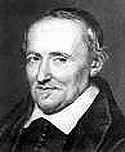
A brief look at one of the original scientific philosophers, Pierre Gassendi